Why Every Small Business Needs an AI Chatbot in 2026
Ten years ago, a chatbot on a small business website was a novelty — usually a clunky decision tree that frustrated more customers than it helped. That's no longer true. Modern AI chat, trained directly on your business's own information, behaves less like a phone menu and more like your best front-desk employee, minus the coffee breaks.
The expectation has shifted
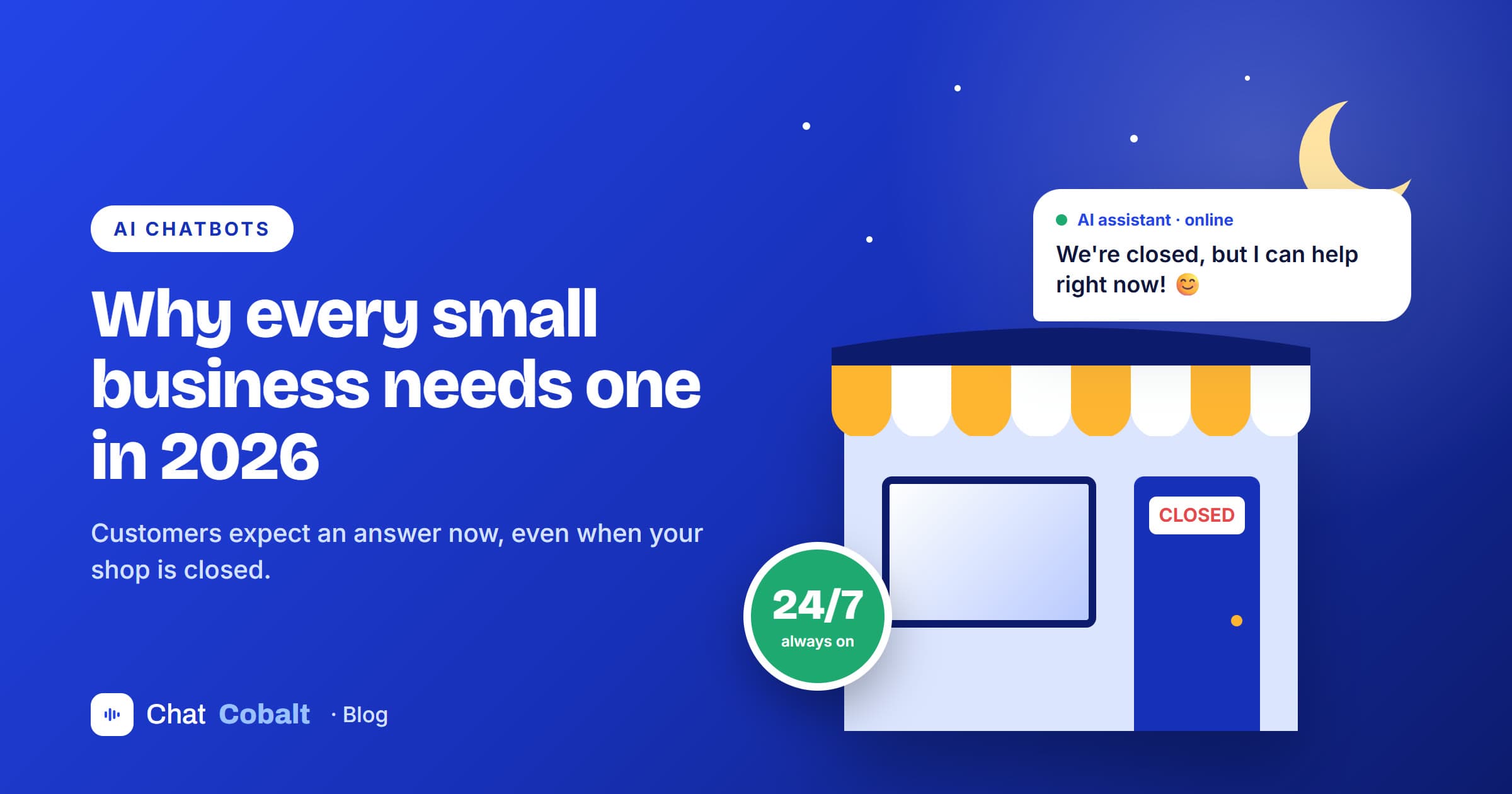
Customers researching a wedding venue, a home service, or a boutique online store don't wait for business hours anymore. If a competitor's site answers a pricing question at 9pm on a Sunday and yours doesn't, that lead is gone before Monday morning.
This isn't about replacing your team — it's about covering the gaps they can't realistically cover:
- The visitor browsing at midnight
- The quick question that doesn't need a phone call
- The fifth time this week someone asks about your cancellation policy
What "trained on your business" actually means
A generic chatbot answers generically. A good one is fed your actual services, pricing tiers, FAQs, and policies, so its answers sound like they came from someone who works there — because in a sense, they did. That's the difference between a bot that deflects and one that converts.
The lead capture problem nobody talks about
Most website contact forms have abysmal completion rates. People don't want to fill out eight fields before they've even decided if they like you. Conversational lead capture — asking for a name and email after a chatbot has already been helpful — converts dramatically better, because the ask feels earned rather than transactional.
Where this is heading
The businesses that adopt this early aren't necessarily bigger or better funded — they're just not losing leads to silence. That's the whole game.
Chat Cobalt is a Codebold IT Solutions product.