Chat vs. Voice: When Should Your Business Use Each?
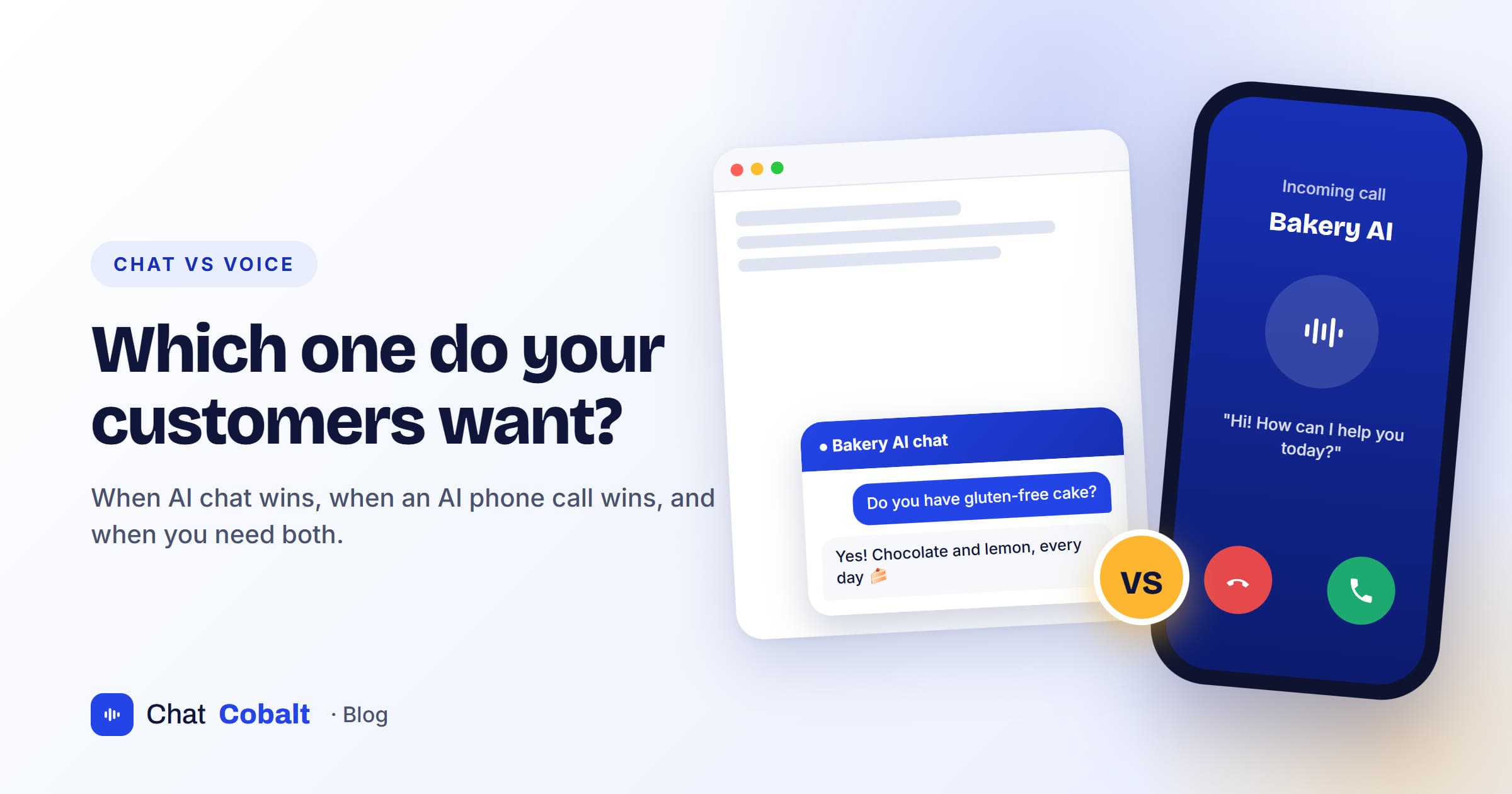
Once a business has AI chat in place, the natural next question is whether voice is worth adding too. The honest answer: it depends on how your customers already prefer to reach you — and often, the right answer is both.
Chat wins when customers are already on your site
If someone is actively browsing your services, pricing page, or portfolio, they're already in a research mindset. A chat widget meets them exactly where they are, with zero context-switching. It's also the better channel for anything that benefits from a written record — pricing details, links, confirmations.
Voice wins when the phone is still the front door
Plenty of small businesses — home services, medical and dental offices, restaurants — still get the bulk of new inquiries by phone, especially from customers who never intended to visit the website at all. For these businesses, an AI voice agent isn't a nice-to-have layered on top of chat; it's the primary channel, and missed calls are directly missed revenue.
The after-hours gap is where both matter most
Whichever channel dominates during business hours, the gap after hours looks the same: a visitor or caller with a real question and no one available. This is where chat and voice, powered by the same underlying business knowledge, do their most valuable work — turning a channel that used to just go to voicemail or an empty inbox into a live conversation.
A simple way to decide
If you're unsure where to start, look at last month's missed calls versus your website's after-hours traffic. Whichever number is bigger tells you which channel to prioritize first — though most businesses eventually run both, because customers don't pick a single channel and stick to it.
Chat Cobalt is a Codebold IT Solutions product.